Design Success vs. Offer Friction: Why Doubling Engagement = Double Revenue
Uncovering the limits of engagement-first design.
Product design
Growth Strategy
Conversion Rate Optimization
Context
An end-to-end product audit of Lingopanda’s "Welcome Offer" redesign using Mixpanel. This project moves beyond vanity metrics to analyze how a visually compelling UI—while doubling user interest—hit a wall at the checkout phase. The analysis demands shift of the product team's focus from just "better design" to better design + "better offer alignment," proving that capturing user curiosity requires a lower-friction entry point than a high-ticket yearly plan.
The Problem
Lingopanda faced a "leaky bucket" problem: 90% monthly churn and 5.5% app stickiness. To drive monetization, we shipped a bold redesign of the 25% Welcome Offer on March 26th.
While the new UI was a visual success and drove a surge in clicks, the total revenue remained flat. We needed to use data to determine if the redesign was failing technically, or if we were simply attracting "low-intent" users who were being scared off by a high-token yearly price point at the final step
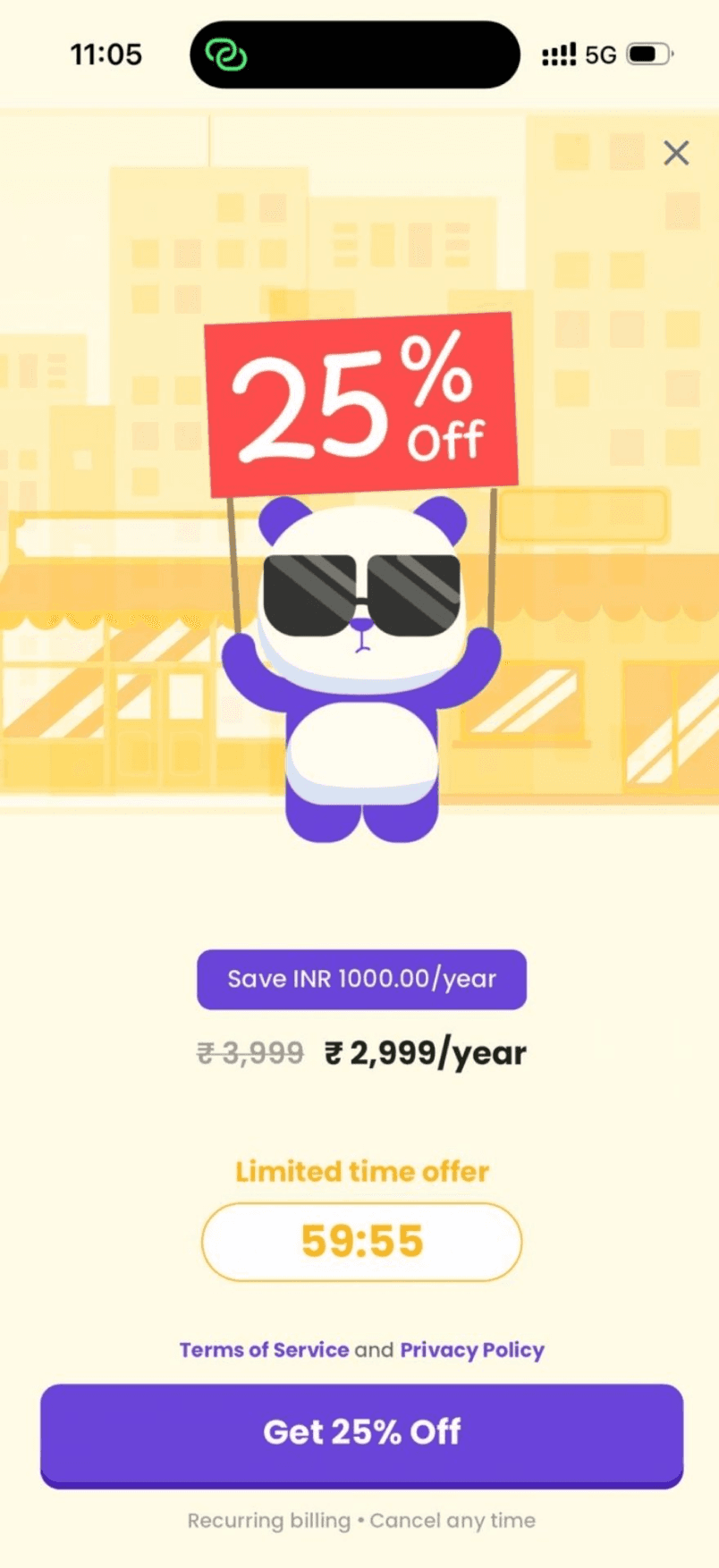
Old design - before March 2026
Solution & Methodology
What Went Right
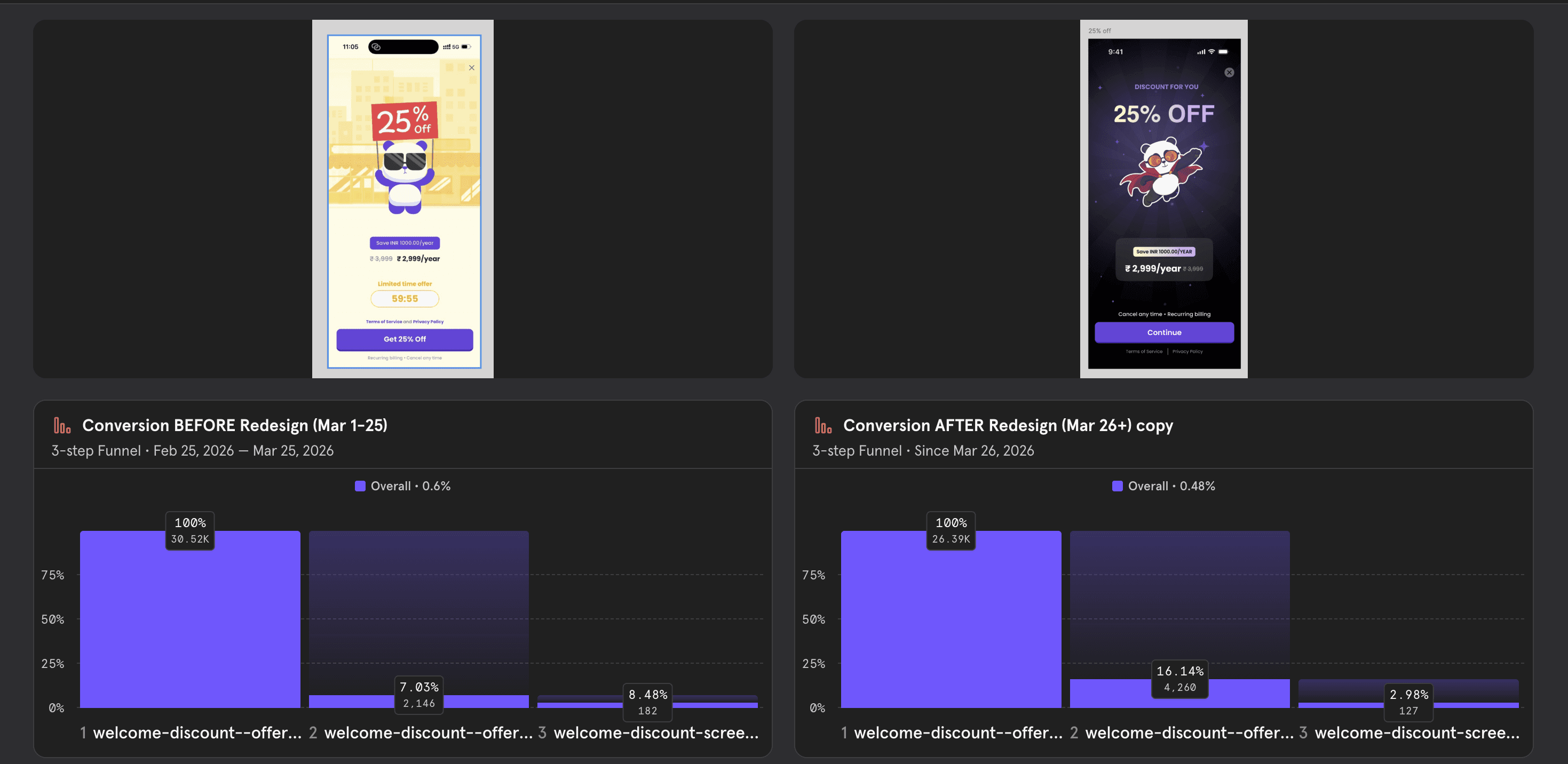
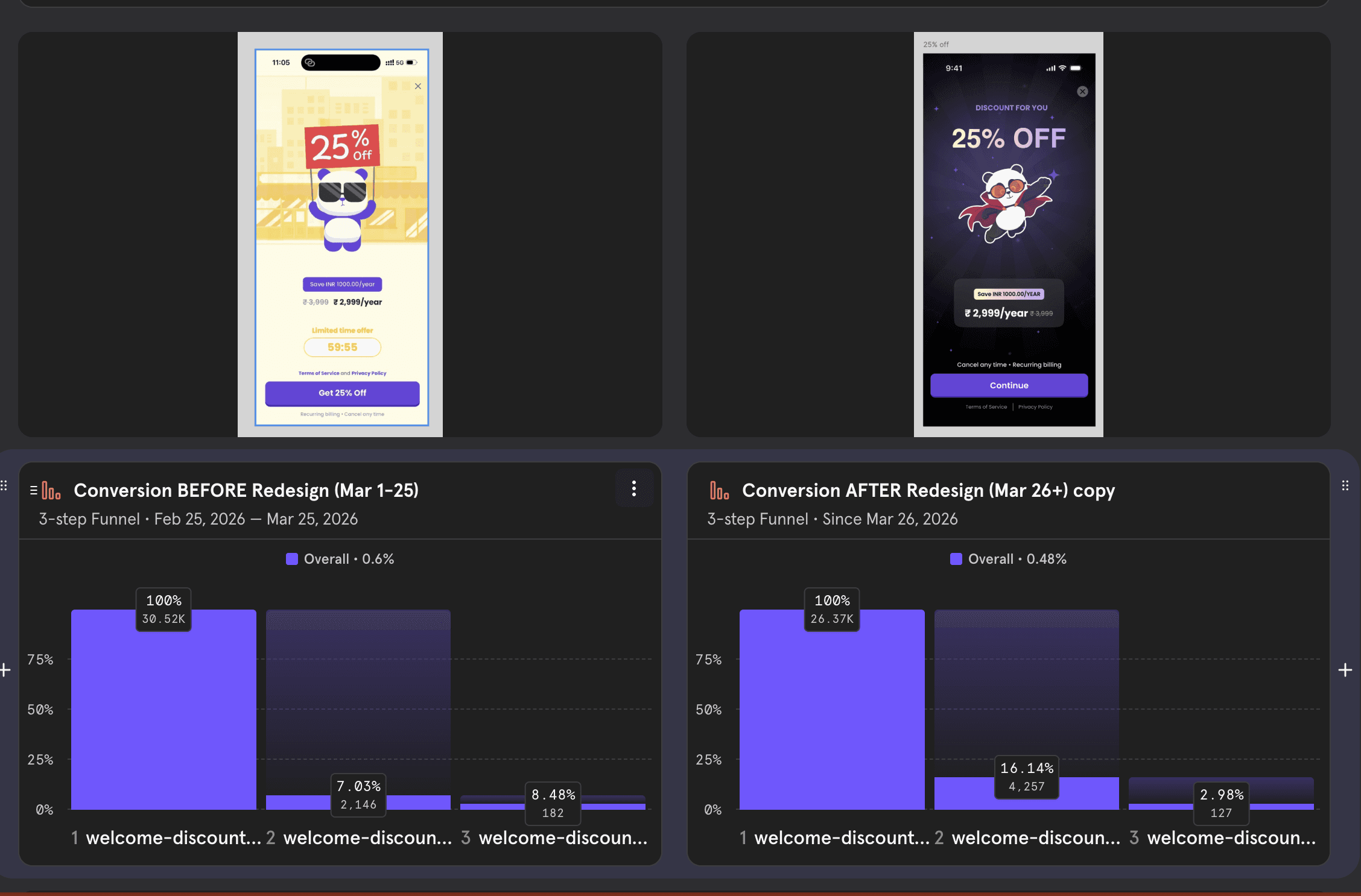
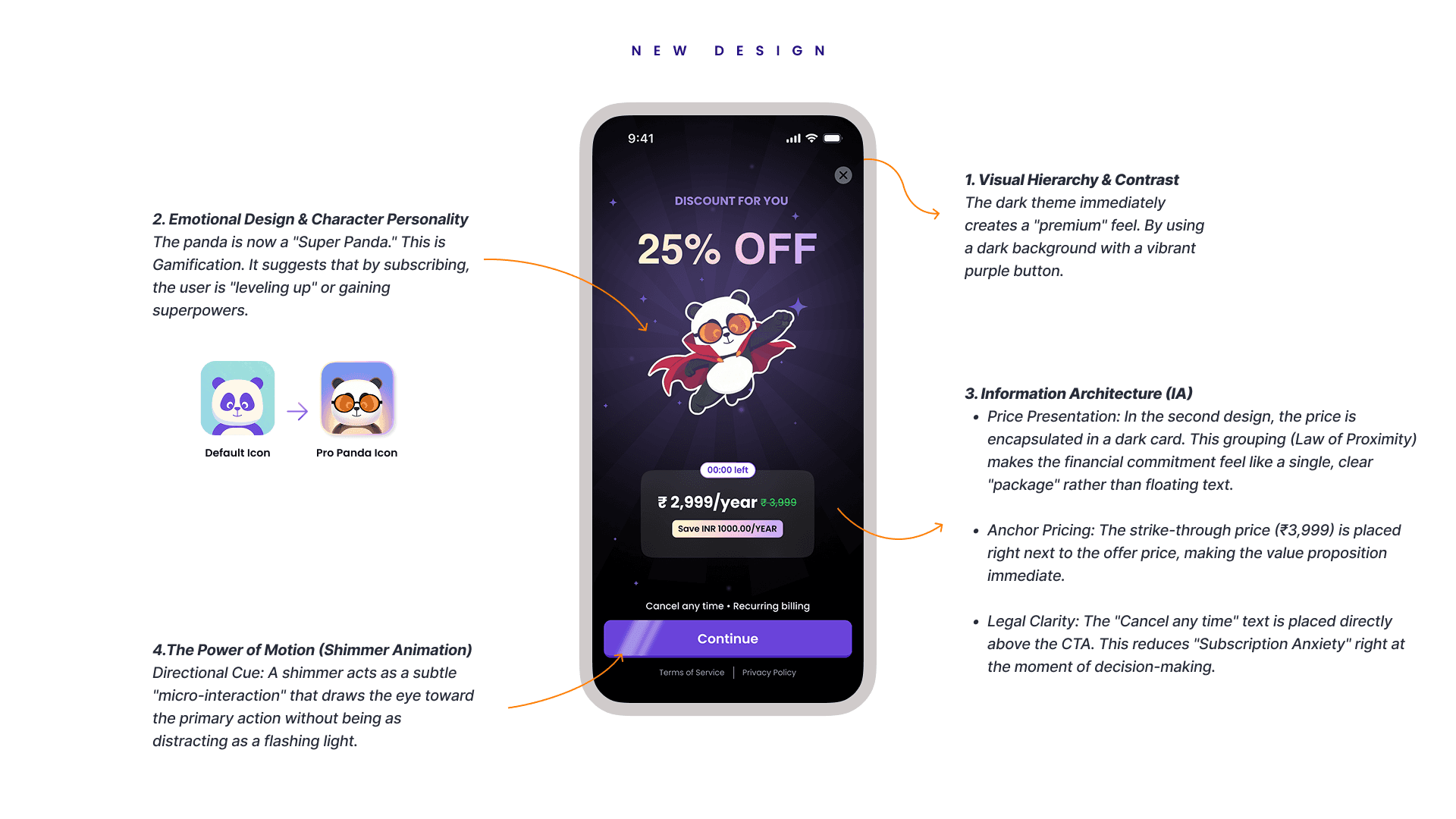
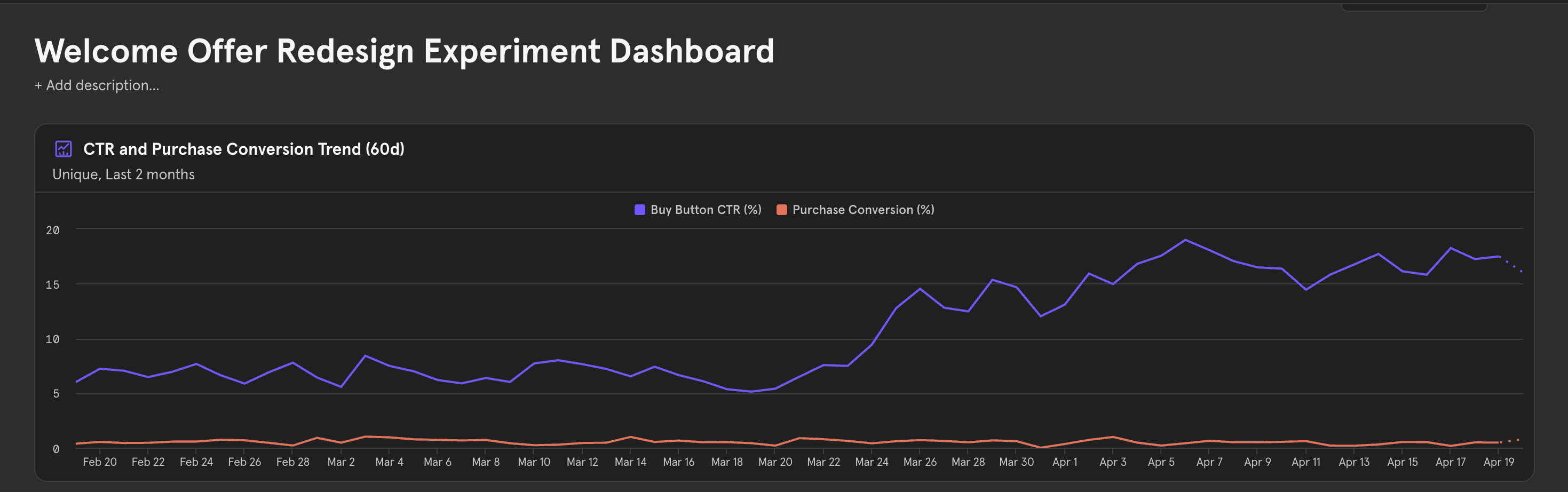
Creative Engagement: The new "Super-Panda" creative was a massive success in capturing user attention. CTR doubled from 7.1% to 15.9%, proving the new
design language resonated strongly with the audience.
Visibility at Scale: The redesign successfully drove over 36,000 unique views and thousands of clicks, effectively "widening the mouth" of the monetization funnel.
What Went Wrong
The "Price Shock" Effect: While more users clicked out of curiosity, they were met with a high-ticket yearly plan (Rs 2,999/year) on the next screen. This created an immediate "expectation gap," leading to a 63% crash in purchase conversion (from 8.5% down to 3.1%).
Funnel Dilution: By making the "Continue" button so attractive, we captured low-intent traffic that wasn't mentally prepared for a significant financial
commitment. This diluted the funnel, making the overall revenue impact neutral (0.5% vs 0.6% historically).Monetization Mismatch: The redesign succeeded as a "UX feature" but failed as a "Monetization strategy" because the high-priced offer didn't align with the lower-intent users now clicking the button.
Key Learnings
CTR is a Vanity Metric: High engagement is meaningless if it doesn't translate to the bottom line. Success must be measured at the final checkout, not the first click.
Intent-Offer Alignment: A high-ticket offer requires high-intent users. When you widen the funnel to "curious" users, you must offer a lower-friction
entry point (e.g., a $1 trial or a monthly plan) to capture that interest.
The Strategy Pivot: The takeaway isn't that the "design failed," but that the "offer strategy" needs to evolve. The next experiment should focus on
tiered pricing or low-friction trials within this high-performing design to convert the "curious clickers" into long-term subscribers.